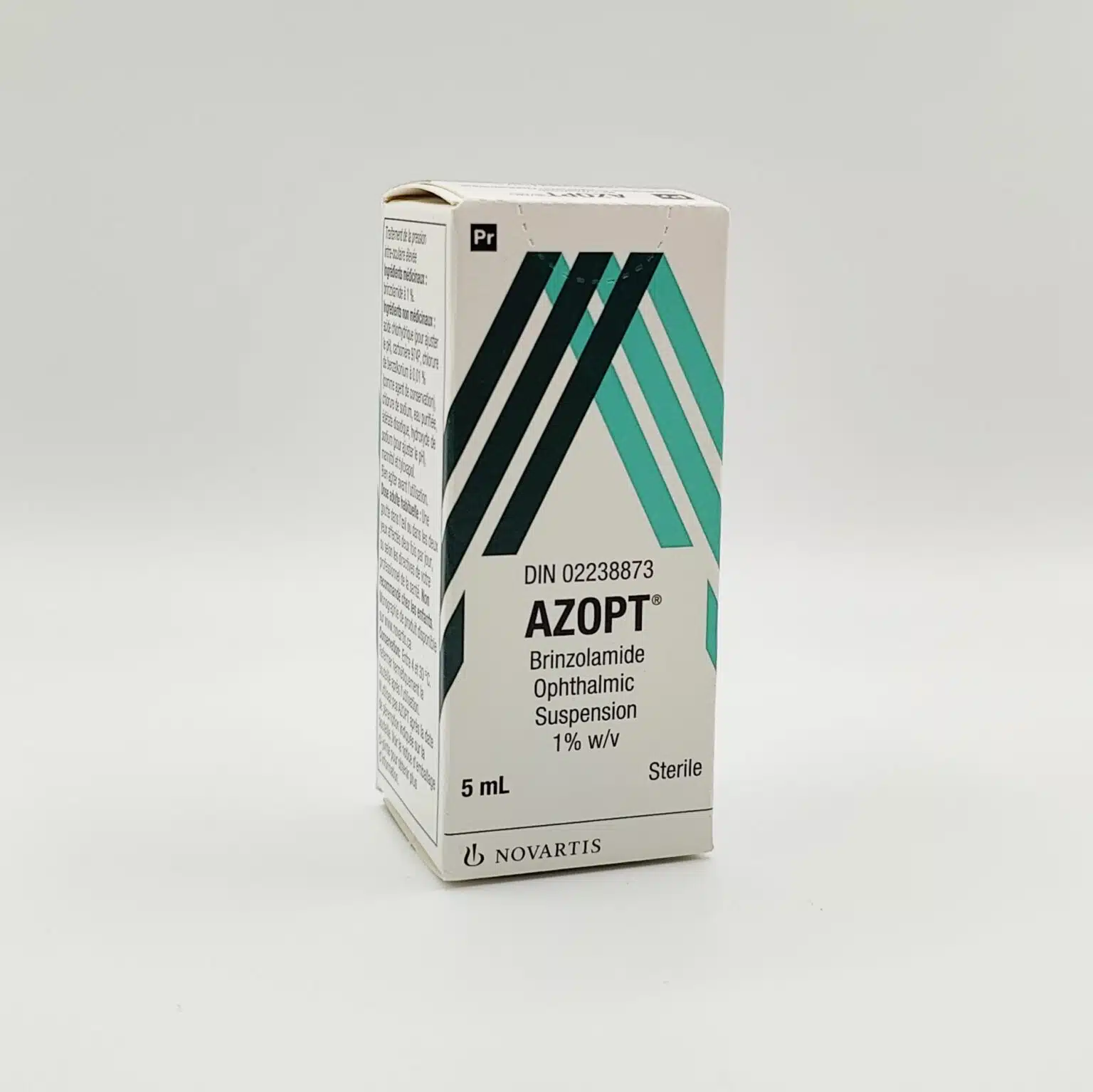
Azopt (Brinzolamide Ophthalmic Suspension) 1% Eye Drops
Azopt is a prescription eye medication designed to lower elevated intraocular pressure (IOP) in patients with open-angle glaucoma or ocular hypertension, helping protect the optic nerve and preserve vision.
Overview of Azopt
Azopt, containing brinzolamide, is a carbonic anhydrase inhibitor ophthalmic suspension used to manage elevated eye pressure in patients diagnosed with open-angle glaucoma or ocular hypertension. Elevated intraocular pressure can damage the optic nerve, leading to progressive vision loss if left untreated. Azopt helps reduce the risk of optic nerve damage by decreasing aqueous humour production, thereby maintaining healthier intraocular pressure levels.
Available in a 1% suspension, Azopt provides patients with an effective and reliable treatment option for long-term management of ocular hypertension.
How Azopt Works
Brinzolamide, the active ingredient in Azopt, functions by inhibiting carbonic anhydrase enzymes in the ciliary body of the eye. This enzyme inhibition reduces the production of aqueous humour—the fluid responsible for maintaining eye pressure—thereby lowering intraocular pressure. By controlling IOP, Azopt helps minimise the risk of optic nerve damage, a key factor in preventing glaucoma-related vision loss.
It is particularly suitable for patients who require a non-beta-blocker alternative for ocular hypertension or open-angle glaucoma treatment, either as monotherapy or in combination with other glaucoma medications.
Indications and Therapeutic Uses
- Management of open-angle glaucoma
- Treatment of ocular hypertension
- Reduction of elevated intraocular pressure to prevent optic nerve damage
Azopt is not intended for use in angle-closure glaucoma or acute glaucoma emergencies. Use should always be guided by a qualified healthcare professional.
Dosage and Administration
Azopt is typically administered as one drop in the affected eye(s) twice daily, ideally every 12 hours. Under clinical guidance, the dosage may be adjusted to three times daily if necessary. Patients should gently shake the bottle prior to each use to ensure uniform suspension of the medication.
If multiple ophthalmic medications are prescribed, a minimum interval of 10 minutes between applications is recommended to prevent dilution and ensure optimal efficacy.
Step-by-step usage instructions:
- Wash hands thoroughly before use.
- Shake the bottle gently to mix the suspension.
- Tilt your head back and pull down the lower eyelid.
- Instil one drop into the conjunctival sac.
- Close eyes gently for 1–2 minutes and avoid blinking excessively.
- Wait at least 10 minutes before applying any additional eye medications.
Potential Side Effects
Like all medications, Azopt may cause side effects, ranging from mild to severe. Patients should monitor for any adverse reactions and consult their healthcare provider as needed.
Common Side Effects
- Blurred vision shortly after application
- Eye discomfort, stinging, or irritation
- Bitter or unusual taste in the mouth (dysgeusia)
- Dry eyes or mild redness
Serious but Rare Side Effects
- Severe allergic reactions including rash, itching, or facial swelling
- Persistent eye pain or sudden vision changes
- Photophobia (increased sensitivity to light)
Immediate medical attention is advised if severe side effects occur.
Drug Interactions
Azopt may interact with other systemic or ophthalmic medications. Patients should inform their healthcare provider of all medications and supplements they are taking to avoid adverse interactions. Notable interactions include:
- Other carbonic anhydrase inhibitors (topical or systemic)
- Salicylates such as acetylsalicylic acid
- Oral beta-blockers or concurrent glaucoma medications
Co-administration with certain drugs may increase the risk of side effects or alter therapeutic efficacy.
Precautions and Contraindications
Before starting Azopt, inform your healthcare provider of any medical conditions, especially:
- Severe kidney or liver impairment
- History of hypersensitivity to sulfonamides or brinzolamide
- Corneal disease or severe dry eye syndrome
- Pregnancy or breastfeeding
Azopt contains benzalkonium chloride, a preservative that can be absorbed by soft contact lenses. Patients should remove lenses before instillation and wait at least 15 minutes before reinserting them.
Purchasing Azopt from LifePath Meds
LifePath Meds offers a convenient and cost-effective option for patients to obtain Azopt. By purchasing from a licensed online pharmacy, patients can maintain access to high-quality medication while potentially reducing prescription costs.
Key considerations when buying online:
- Ensure pharmacy legitimacy: Only use licensed pharmacies like LifePath Meds to avoid counterfeit medications.
- Consult your healthcare provider: Verify suitability and dosage instructions before ordering.
- Understand import regulations: Personal import of up to a 90-day supply is permitted under FDA guidelines.
Buying from LifePath Meds ensures access to authentic, properly stored medication at competitive prices.
Storage Instructions
Store Azopt at temperatures between 4°C and 30°C (36°F–86°F). Keep the bottle tightly closed when not in use, avoid freezing, and store out of reach of children. Proper storage preserves efficacy and prevents contamination.
Frequently Asked Questions (FAQs)
Is Azopt effective for treating glaucoma?
Yes. Azopt is specifically indicated for lowering intraocular pressure in patients with open-angle glaucoma or ocular hypertension, which helps prevent progressive vision loss.
How long does a bottle of Azopt last?
A standard 5 mL bottle typically lasts around four weeks when used as directed (one drop twice daily). Duration may vary depending on prescribed dosing frequency.
Can Azopt be used with other eye drops?
Yes, but it is recommended to wait at least 10 minutes between different eye medications to ensure effectiveness and prevent dilution.
Where can I find more detailed information about Azopt?
Refer to the official product monograph for in-depth guidance: Azopt Product Monograph.