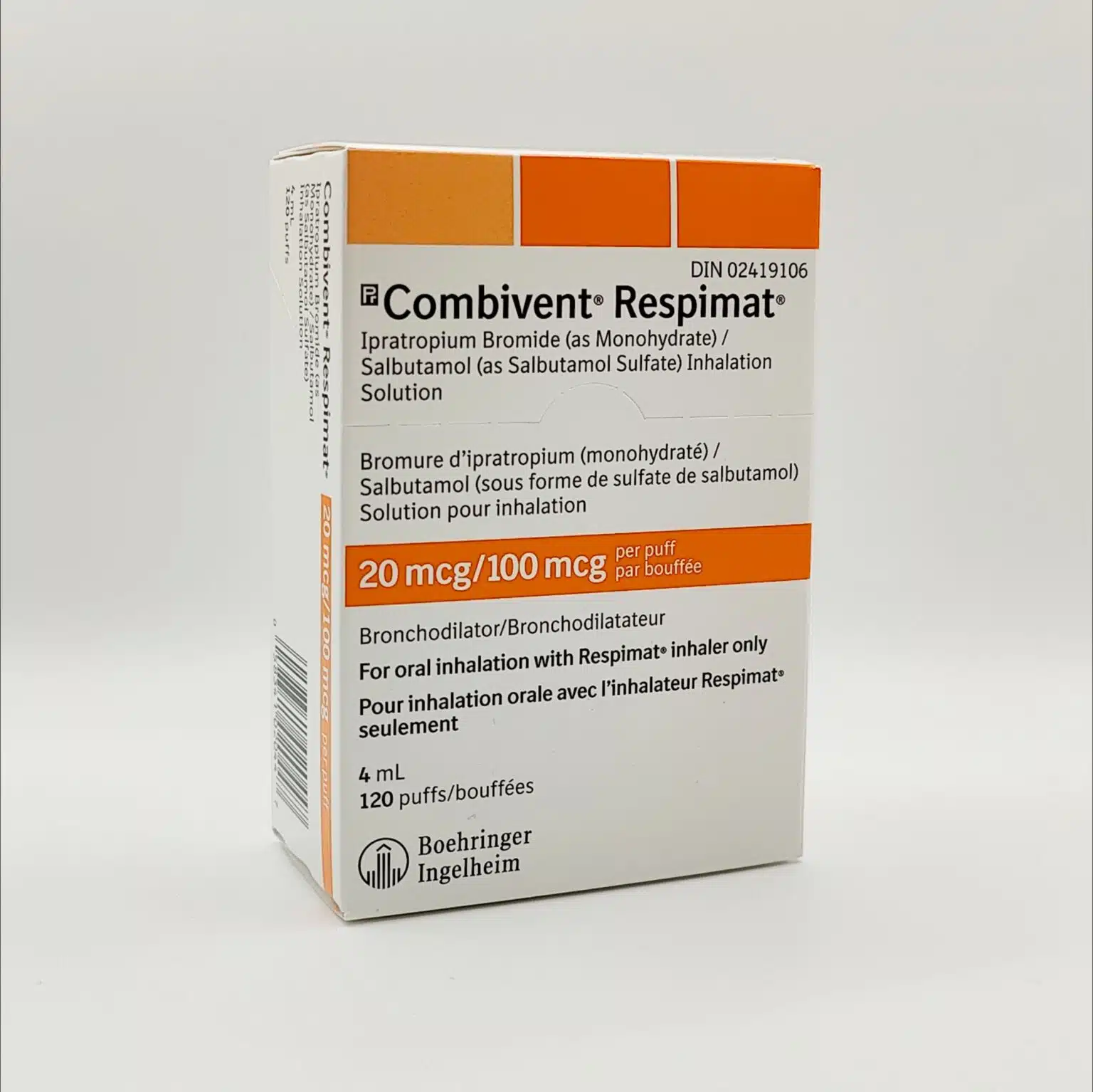
Combivent Respimat Inhaler (Ipratropium Bromide / Salbutamol)
Therapeutic Class: Bronchodilator Combination (Anticholinergic + Short-Acting Beta2-Agonist)
Indication: Management of bronchospasm associated with chronic obstructive pulmonary disease (COPD)
Comprehensive Overview of Combivent Respimat
Combivent Respimat is a prescription inhalation medicine formulated to relieve bronchospasm in adults diagnosed with chronic obstructive pulmonary disease (COPD). The inhaler contains two active bronchodilators — Ipratropium Bromide and Salbutamol — which act through complementary mechanisms to widen narrowed airways and improve airflow.
COPD is a long-term respiratory condition characterised by airflow limitation, commonly associated with chronic bronchitis and emphysema. According to the
NHS guidance on chronic obstructive pulmonary disease, symptoms such as breathlessness, wheezing, chest tightness and persistent cough can significantly impair quality of life. Combivent Respimat is designed to help manage these symptoms by delivering dual bronchodilation in a convenient soft mist inhaler format.
Active Ingredients and Mechanism of Action
Ipratropium Bromide – Anticholinergic Bronchodilator
Ipratropium Bromide is classified as a short-acting muscarinic antagonist (SAMA). It works by inhibiting the action of acetylcholine at muscarinic receptors in the bronchial smooth muscle. By blocking these receptors, it prevents reflex bronchoconstriction and reduces airway narrowing.
Salbutamol – Short-Acting Beta2-Agonist (SABA)
Salbutamol stimulates beta2-adrenergic receptors located in bronchial smooth muscle. Activation of these receptors leads to relaxation of airway muscles, resulting in rapid bronchodilation and symptomatic relief of wheeze and shortness of breath.
Dual-Action Bronchodilation
The combination of an anticholinergic agent with a beta2-agonist offers additive bronchodilatory effects. By targeting different receptor pathways, Combivent Respimat can help reduce both the frequency and intensity of bronchospasm episodes in individuals with COPD.
Indications and Clinical Use
Combivent Respimat is indicated for the treatment of bronchospasm in patients with chronic obstructive pulmonary disease who require more than one bronchodilator. It is not intended as first-line rescue therapy for acute severe asthma unless specifically prescribed.
UK clinical guidance from the National Institute for Health and Care Excellence (NICE) COPD guidelines recognises the importance of bronchodilators in symptom management and exacerbation prevention. Treatment decisions should always be individualised by a qualified healthcare professional.
Dosage and Administration
Inhalation solution delivered via Respimat soft mist inhaler.
Each actuation delivers:
- 20 micrograms of Ipratropium Bromide
- 100 micrograms of Salbutamol
The usual recommended dose is one inhalation four times daily. If necessary, additional inhalations may be used; however, no more than six inhalations should be taken within 24 hours.
Patients must adhere strictly to the prescribing clinician’s instructions. Excessive use of short-acting beta-agonists may increase the risk of adverse cardiovascular effects.
How to Use the Respimat Device
- Prepare the inhaler according to the patient information leaflet before first use.
- Exhale gently and fully.
- Seal lips around the mouthpiece without covering the air vents.
- Press the dose-release button while inhaling slowly and deeply.
- Hold breath for approximately 10 seconds before exhaling.
Correct inhaler technique is essential for optimal drug delivery. Healthcare professionals may provide inhaler training and technique review.
Benefits of Combivent Respimat for COPD Management
- Dual bronchodilator therapy in a single inhaler
- Rapid onset bronchodilation via Salbutamol
- Reduction in bronchospasm frequency
- Improved airflow and breathing comfort
- Portable and convenient soft mist delivery system
Appropriate bronchodilator therapy can contribute to improved symptom control and daily functioning in COPD patients when used as prescribed.
Possible Side Effects
As with all medicines, Combivent Respimat may cause side effects, although not everyone experiences them.
Common Side Effects
- Headache
- Dry mouth
- Cough
- Nausea
- Dizziness
Less Common but Serious Reactions
- Cardiac arrhythmias
- Urinary retention
- Paradoxical bronchospasm
- Raised intraocular pressure in susceptible individuals (e.g., narrow-angle glaucoma)
Seek urgent medical attention if breathing worsens immediately after inhalation or if symptoms of a severe allergic reaction occur.
Drug Interactions
Combivent Respimat may interact with certain medicines, potentially altering effectiveness or increasing adverse effects. Interacting drug classes include:
- Beta-blockers
- Diuretics
- Monoamine oxidase inhibitors (MAOIs)
- Tricyclic antidepressants
- Other anticholinergic or beta2-agonist medicines
Always inform your prescriber of all prescription medicines, over-the-counter treatments and herbal supplements.
Precautions and Special Considerations
Inform your healthcare provider before using Combivent if you have:
- Cardiovascular disease
- Glaucoma
- Bladder obstruction or urinary retention
- Severe hepatic or renal impairment
- Diabetes mellitus
Use during pregnancy or breastfeeding should only occur when the anticipated benefit justifies potential risk. Clinical guidance from the Medicines and Healthcare products Regulatory Agency (MHRA) advises that all medication use in pregnancy should be clinically assessed.
Storage Instructions
Store at room temperature between 15°C and 30°C. Protect from freezing conditions, direct sunlight and excess moisture. Keep out of sight and reach of children.
Buying Combivent Respimat Online
Combivent Respimat may be obtained through regulated pharmacies. When purchasing medicines online, ensure the pharmacy is properly licensed and requires a valid prescription. You may explore options via LifePath Meds online pharmacy.
For additional respiratory therapies, see our COPD treatment options page.
Frequently Asked Questions
What is Combivent Respimat used for?
It is prescribed for the management of bronchospasm in individuals with chronic obstructive pulmonary disease.
How often can Combivent be used?
The standard regimen is one inhalation four times daily, not exceeding six inhalations within 24 hours unless otherwise directed by a clinician.
Can Combivent be used as a rescue inhaler?
It contains Salbutamol, which has rapid bronchodilatory action, but treatment plans should follow medical advice tailored to your respiratory condition.