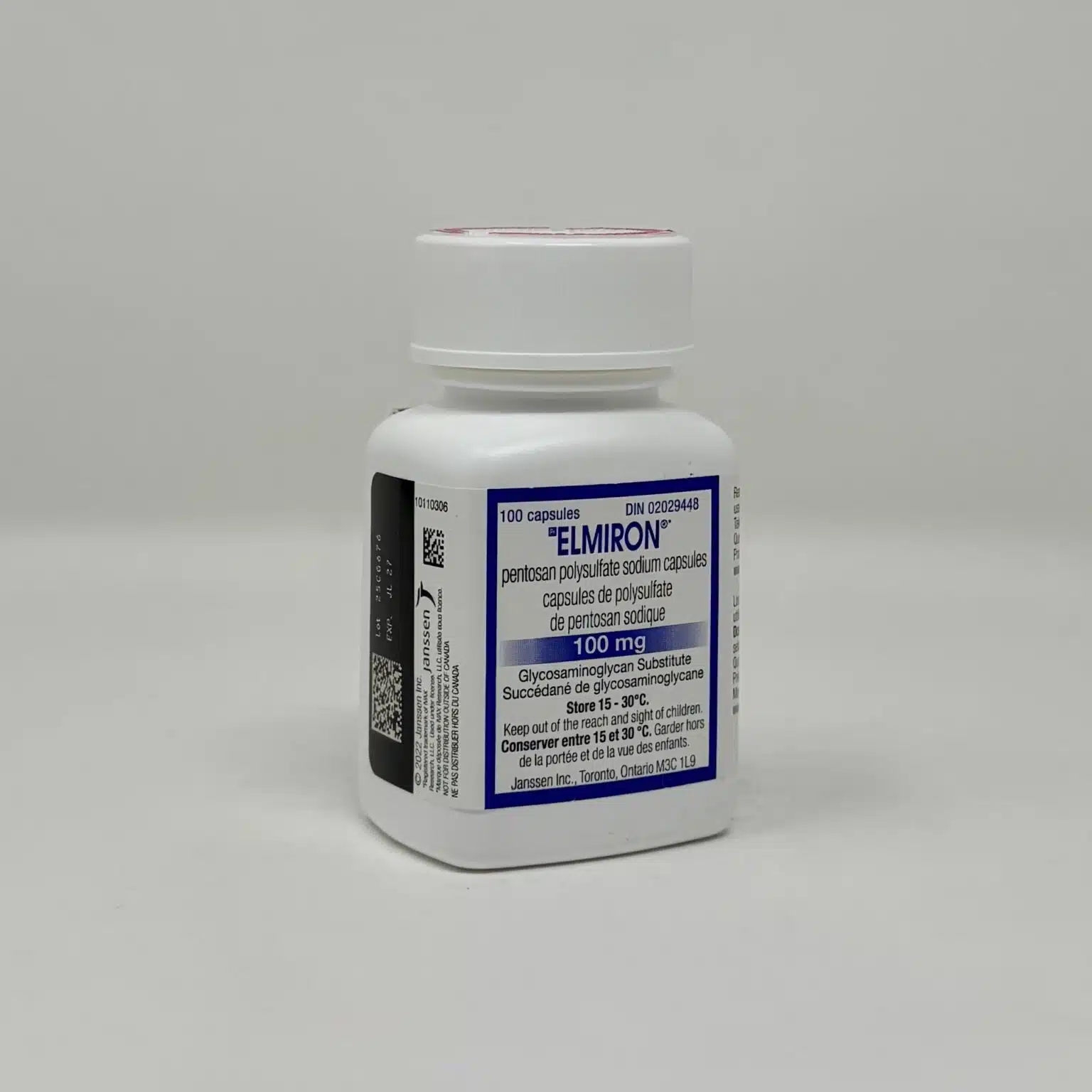
Elmiron® (Pentosan Polysulfate Sodium) 100 mg Capsules
Elmiron® (pentosan polysulfate sodium) is an oral medication indicated for the treatment of interstitial cystitis (IC), also known as painful bladder syndrome. It is designed to help restore the bladder’s protective lining and reduce urinary discomfort, urgency and pelvic pain associated with this chronic condition.
What Is Elmiron?
Elmiron contains pentosan polysulfate sodium, a semi-synthetic sulphated polysaccharide classified as a glycosaminoglycan (GAG) analogue. It is one of the only oral medicines specifically approved for the management of interstitial cystitis, a long-term bladder disorder characterised by pelvic pain, bladder pressure and urinary frequency.
Each capsule contains 100 mg of pentosan polysulfate sodium. Treatment is typically initiated and monitored by a healthcare professional experienced in managing chronic bladder disorders.
Understanding Interstitial Cystitis (Painful Bladder Syndrome)
Interstitial cystitis (IC), sometimes referred to as bladder pain syndrome (BPS), is a chronic inflammatory condition affecting the bladder wall. Symptoms vary in severity and may include:
- Persistent bladder or pelvic pain
- Pressure or discomfort that worsens as the bladder fills
- Urgency and frequent urination, including nocturia
- Pain during sexual intercourse
Although the exact cause is not fully understood, evidence suggests that disruption of the bladder’s protective glycosaminoglycan layer allows urinary irritants to penetrate and trigger inflammation. Management strategies often involve a combination of pharmacological therapy, bladder training and lifestyle modification. Guidance may align with recommendations from organisations such as the National Institute for Health and Care Excellence (NICE).
How Elmiron Works
In individuals with interstitial cystitis, the bladder’s GAG layer may be damaged or deficient. This protective lining normally acts as a barrier between urine and the underlying bladder tissue.
Pentosan polysulfate sodium is believed to adhere to the bladder mucosa, forming a protective coating that supplements or repairs the compromised GAG layer. By reinforcing this barrier, Elmiron may:
- Reduce irritation caused by urinary solutes
- Decrease inflammatory responses in bladder tissue
- Alleviate pelvic pain and pressure
- Lower the frequency and intensity of symptom flare-ups
Clinical experience indicates that symptom improvement may take several weeks to become noticeable, with continued therapy often required to maintain benefit.
Indications and Use
Elmiron is indicated for the initial and ongoing treatment of interstitial cystitis. It is not recommended for use in children under 18 years of age due to insufficient safety and efficacy data in this population.
Some patients begin to notice symptom improvement after 6–8 weeks of therapy. However, full therapeutic effects may require several months of consistent dosing. Long-term treatment is common in chronic IC management.
Dosage and Administration
Recommended Dose
The standard adult dose is 100 mg taken orally three times daily (total daily dose: 300 mg).
How to Take Elmiron
- Swallow capsules whole with water.
- Take at least 1 hour before meals or 2 hours after meals.
- Take doses at evenly spaced intervals.
- Do not double doses to make up for a missed capsule.
Consistent daily administration is essential, as intermittent use may reduce effectiveness. If a dose is missed, take the next scheduled dose as directed.
Potential Side Effects
Elmiron is generally well tolerated; however, adverse effects may occur.
Common Adverse Effects
- Nausea, diarrhoea or abdominal discomfort
- Headache or dizziness
- Rash
- Alopecia (usually mild and reversible hair thinning)
- Elevated liver enzymes
Bleeding-Related Effects
- Rectal bleeding
- Epistaxis (nosebleeds)
- Gum bleeding
- Easy bruising
Vision Changes
Long-term use has been associated in rare cases with pigmentary maculopathy, a retinal disorder affecting the macula. Symptoms may include:
- Blurred or distorted vision
- Difficulty reading
- Impaired adaptation to low light
Patients should promptly report any visual disturbances to their healthcare provider.
Warnings and Precautions
Pentosan polysulfate sodium exhibits mild anticoagulant properties, estimated at approximately one-fifteenth the activity of heparin.
- Use caution in patients with bleeding disorders.
- Monitor patients taking anticoagulants or antiplatelet agents.
- Report unusual bruising or prolonged bleeding.
- Monitor liver function where clinically indicated.
- Arrange ophthalmological assessment for long-term therapy.
Drug Interactions
Elmiron may increase bleeding risk when combined with other agents that affect coagulation.
- Warfarin
- Heparin
- Thrombolytics (e.g., tPA, streptokinase)
- High-dose aspirin
- Non-steroidal anti-inflammatory drugs (NSAIDs)
- Herbal supplements such as ginkgo biloba or garlic
Always inform your healthcare professional about all medicines and supplements being taken.
Use in Pregnancy and Breastfeeding
Data regarding use during pregnancy are limited. Animal studies show minimal evidence of harm, but controlled human data are lacking. Elmiron should be used during pregnancy only if clearly needed and under medical supervision.
It is unknown whether pentosan polysulfate sodium is excreted in breast milk. A healthcare provider should assess the risks and benefits of continuing breastfeeding during treatment.
Long-Term Monitoring and Eye Health
Emerging evidence suggests a potential association between prolonged exposure and pigmentary maculopathy. Patients receiving therapy beyond three years should undergo periodic ophthalmologic examinations to detect early retinal changes.
Lifestyle Strategies for Interstitial Cystitis
Combining pharmacological treatment with lifestyle adjustments may improve outcomes.
- Avoid caffeine, alcohol, artificial sweeteners and spicy foods.
- Maintain adequate hydration.
- Practise stress-reduction techniques.
- Keep a bladder diary to identify triggers.
Comparison with Alternative Therapies
Although Elmiron is the only oral medicine specifically approved for interstitial cystitis, other treatment options include:
- Intravesical dimethyl sulfoxide (DMSO)
- Tricyclic antidepressants (e.g., amitriptyline)
- Antihistamines
- Pelvic floor physiotherapy
Treatment selection depends on symptom severity and patient response.
Buying Elmiron Online
Purchasing Elmiron online through LifePath Meds may provide cost savings compared to some retail pharmacies. Patients should ensure they have a valid prescription and confirm that the pharmacy operates within applicable regulatory standards.
LifePath Meds may offer promotional discounts, including coupon code Hello10 for first orders, subject to availability and terms.
Storage Instructions
- Store at controlled room temperature (15°C to 30°C).
- Keep in the original container.
- Protect from excessive heat, moisture and direct sunlight.
- Keep out of sight and reach of children.