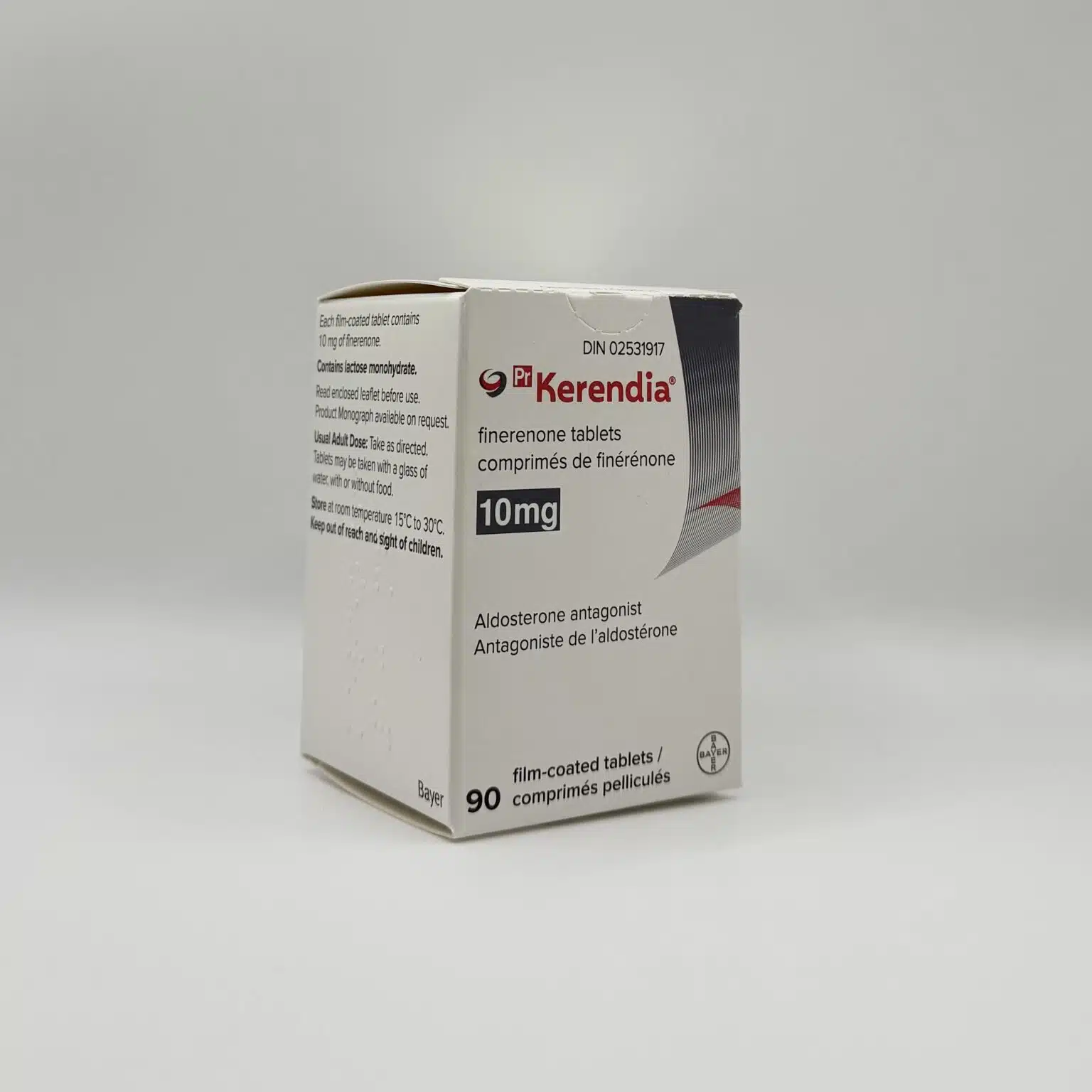
Kerendia (Finerenone) Tablets
Kerendia (finerenone) is a non-steroidal mineralocorticoid receptor antagonist indicated for adults with chronic kidney disease (CKD) associated with type 2 diabetes (T2D) to reduce the risk of kidney failure and cardiovascular events, including heart attack, stroke, or hospitalisation for heart failure.
Comprehensive Guide to Kerendia (Finerenone) for CKD and Type 2 Diabetes
Kerendia tablets contain finerenone, an aldosterone (mineralocorticoid receptor) antagonist designed to address the cardiorenal risks associated with chronic kidney disease (CKD) in adults with type 2 diabetes (T2D). Patients with T2D are at significantly increased risk of progressive kidney impairment and cardiovascular complications. Kerendia works alongside standard therapies to help reduce these risks.
In people with CKD and T2D, overactivation of the mineralocorticoid receptor contributes to inflammation and fibrosis in kidney and heart tissue. By blocking this pathway, finerenone provides targeted protection against further organ damage. Regulatory authorities such as the European Medicines Agency (EMA) and the U.S. Food and Drug Administration (FDA) have approved finerenone for reducing the risk of sustained eGFR decline, kidney failure, cardiovascular death, non-fatal myocardial infarction, non-fatal stroke, and hospitalisation for heart failure in appropriate patients.
For patients managing long-term cardiorenal conditions, affordability can influence treatment adherence. Purchasing Kerendia through regulated services such as LifePath Meds may offer cost advantages while maintaining pharmaceutical quality standards.
What Is Kerendia Used For?
Kerendia is indicated in adults with chronic kidney disease associated with type 2 diabetes to reduce the risk of:
- Kidney failure
- Sustained decline in estimated glomerular filtration rate (eGFR)
- Cardiovascular death
- Non-fatal heart attack (myocardial infarction)
- Non-fatal stroke
- Hospitalisation for heart failure
It is typically prescribed in addition to standard-of-care treatments, including renin-angiotensin system (RAS) blockade with ACE inhibitors or angiotensin receptor blockers (ARBs), blood pressure control, lipid management, and glycaemic optimisation. Guidance from organisations such as NICE and major nephrology and cardiology societies emphasises comprehensive risk reduction strategies in diabetic kidney disease.
How Kerendia (Finerenone) Works
Finerenone is a non-steroidal mineralocorticoid receptor antagonist. Aldosterone binds to mineralocorticoid receptors in kidney and cardiovascular tissues, promoting sodium retention, inflammation, fibrosis, and structural damage over time.
By selectively blocking the mineralocorticoid receptor, Kerendia:
- Reduces pro-inflammatory signalling
- Decreases fibrotic tissue changes in the kidneys and heart
- Helps stabilise kidney function
- Contributes to improved cardiovascular outcomes
Unlike traditional steroidal mineralocorticoid receptor antagonists, finerenone has a distinct pharmacological profile, offering targeted receptor activity with established outcome data in CKD associated with T2D.
Kerendia Dosage and Administration
Kerendia is available as 10 mg and 20 mg oral tablets. The starting dose is determined by the patient’s estimated glomerular filtration rate (eGFR).
Recommended Starting Dose Based on eGFR
- eGFR 25–60 mL/min/1.73 m²: 10 mg once daily
- eGFR ≥60 mL/min/1.73 m²: 20 mg once daily
Potassium levels and kidney function must be monitored regularly. Dose adjustments may be required based on serum potassium concentrations and changes in eGFR.
Administration Guidance
- Take once daily, with or without food.
- Take at approximately the same time each day.
- Swallow tablets whole with water.
- Avoid grapefruit and grapefruit juice during treatment.
Regular laboratory monitoring is essential to minimise the risk of hyperkalaemia and to assess kidney function over time.
Monitoring Requirements
Because finerenone affects potassium balance and kidney function, laboratory monitoring is central to safe therapy.
- Serum potassium should be measured prior to initiation.
- Repeat potassium testing is recommended within four weeks of starting or adjusting the dose.
- Periodic eGFR assessment is required.
Treatment may need to be interrupted or discontinued if potassium levels rise significantly.
Possible Side Effects of Kerendia
Common Side Effects
- Hyperkalaemia (elevated potassium levels)
- Decreased glomerular filtration rate
- Hypotension (low blood pressure)
Serious but Less Common Reactions
- Severe hyperkalaemia leading to cardiac rhythm disturbances
- Allergic reactions, including rash or swelling
Patients should contact their healthcare provider if they experience muscle weakness, palpitations, dizziness, or other concerning symptoms.
Drug Interactions
Kerendia may interact with several medications that influence potassium levels or drug metabolism.
- Potassium-sparing diuretics
- ACE inhibitors or ARBs
- Strong CYP3A4 inhibitors (e.g., itraconazole, clarithromycin)
Strong CYP3A4 inhibitors can significantly increase finerenone exposure and are contraindicated. Always provide a complete medication list to your healthcare professional.
Precautions Before Starting Kerendia
Inform your healthcare provider if you have:
- Elevated potassium levels
- Severe kidney impairment
- Liver disease
- Addison’s disease
- Pregnancy or plans to become pregnant
- Are breastfeeding
Kerendia should not be used in patients with Addison’s disease or those receiving strong CYP3A4 inhibitors. Careful potassium monitoring is essential throughout therapy.
Buying Kerendia Online
Kerendia is frequently prescribed as part of long-term disease management. Online purchasing through licensed services such as LifePath Meds may provide meaningful cost savings due to regulated pricing differences.
When purchasing online:
- Verify pharmacy licensing and credentials.
- Consult your healthcare provider before ordering internationally.
- Ensure appropriate laboratory monitoring is arranged.
Storage Instructions
- Store at 15°C–30°C.
- Keep in original packaging.
- Protect from excessive moisture and heat.
- Keep out of reach of children.
How To Use Kerendia Safely
Take Kerendia exactly as prescribed. Swallow the tablet whole with water once daily. Maintain regular follow-up appointments to monitor kidney function and potassium levels. Continue background therapies for blood pressure, cholesterol, and glucose control unless otherwise directed.
Frequently Asked Questions (FAQs)
What is Kerendia used for?
Kerendia reduces the risk of kidney failure and cardiovascular events in adults with CKD associated with type 2 diabetes.
How does Kerendia protect the kidneys?
It blocks mineralocorticoid receptor activation, reducing inflammation and fibrosis that contribute to progressive kidney damage.
Can Kerendia raise potassium levels?
Yes. Hyperkalaemia is a known risk, which is why regular monitoring is essential.