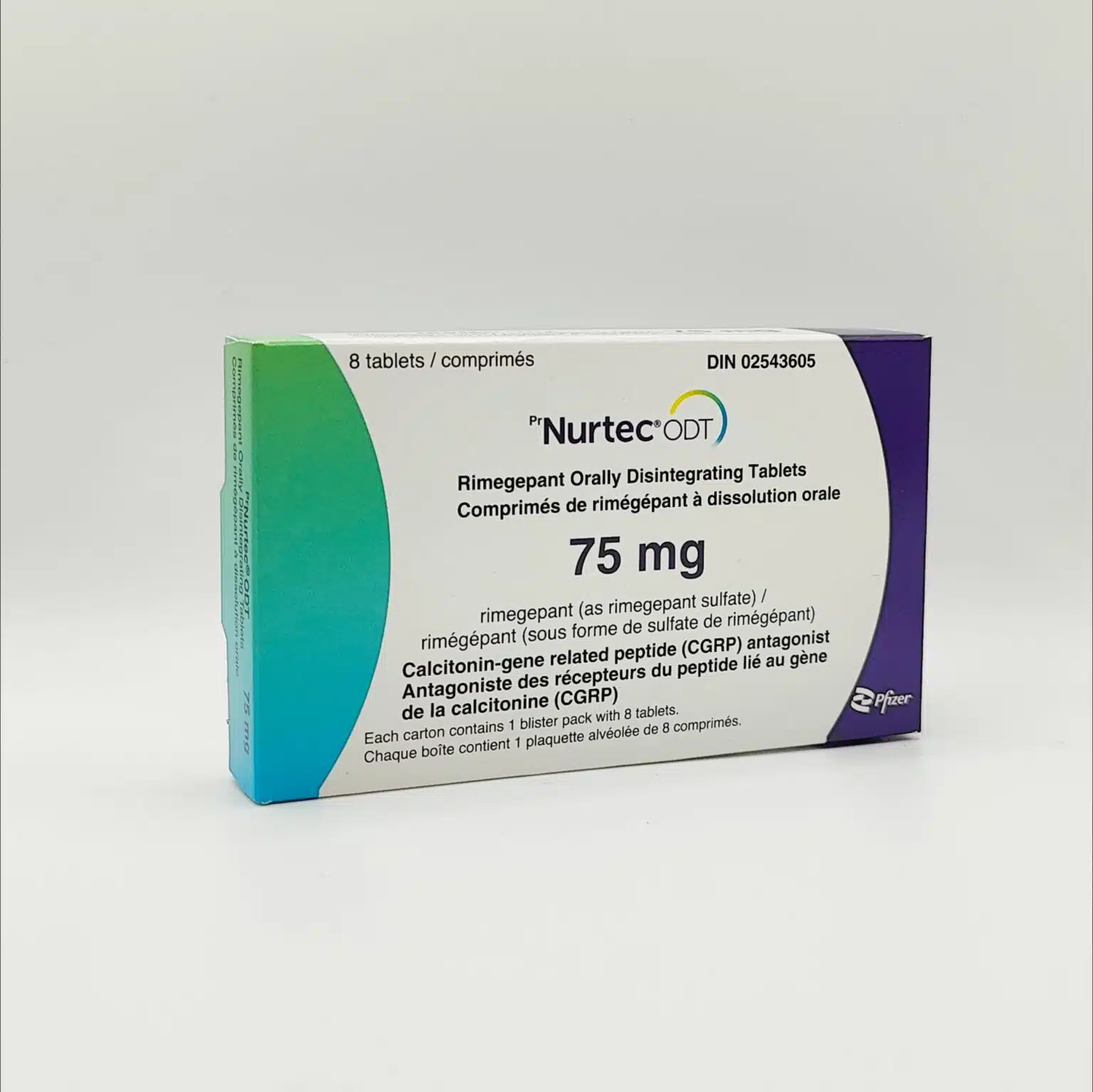
Nurtec ODT (Rimegepant) 75 mg Orally Disintegrating Tablets
Calcitonin Gene-Related Peptide (CGRP) receptor antagonist for the acute treatment of migraine with or without aura in adults.
Comprehensive Overview of Nurtec ODT (Rimegepant)
Nurtec ODT (rimegepant) 75 mg is an orally disintegrating tablet indicated for the acute treatment of migraine attacks, with or without aura, in adults. It belongs to a therapeutic class known as calcitonin gene-related peptide (CGRP) receptor antagonists, sometimes referred to as “gepants”. By blocking CGRP receptor signalling, rimegepant helps alleviate migraine pain and associated symptoms.
Unlike traditional migraine-specific treatments such as triptans, which act on serotonin (5-HT1B/1D) receptors and may cause vasoconstriction, rimegepant does not constrict blood vessels. This pharmacological distinction is clinically relevant for patients who cannot tolerate or are not suitable candidates for vasoconstrictive therapies.
Nurtec ODT is designed for convenience. The tablet dissolves on or under the tongue without the need for water, making it particularly practical during acute migraine episodes when nausea, light sensitivity, or limited access to fluids may be problematic.
What Nurtec ODT Is Used For
- Acute treatment of migraine attacks, with or without aura, in adults (18 years and over).
Migraine is a complex neurological disorder characterised by recurrent episodes of moderate to severe headache, frequently accompanied by nausea, photophobia (light sensitivity), phonophobia (sound sensitivity), and in some cases aura symptoms such as visual disturbances. According to the NHS overview of migraine, effective early treatment of attacks may reduce severity and functional impairment.
Nurtec ODT is not authorised for paediatric use (under 18 years of age).
How Nurtec ODT Works: Mechanism of Action
Rimegepant exerts its therapeutic effect by selectively antagonising the CGRP receptor. CGRP is a neuropeptide widely implicated in migraine pathophysiology. During a migraine attack, CGRP levels rise and contribute to:
- Neurogenic inflammation
- Pain transmission in trigeminal pathways
- Central sensitisation processes
By blocking CGRP receptor activation, rimegepant interrupts this signalling cascade, helping to reduce headache intensity and associated symptoms. Importantly, CGRP receptor antagonists do not cause vasoconstriction, distinguishing them from triptans.
For further scientific background, see the European Medicines Agency (EMA) assessment report for rimegepant (marketed in some regions under alternative brand names).
Dosing and Administration
Recommended Dose
- 75 mg orally, as needed, for a migraine attack
- Maximum: 75 mg within 24 hours
- Safety of more than 15 doses within 30 days has not been established
How to Take Nurtec ODT
- Ensure your hands are completely dry before handling the blister pack.
- Peel back the foil—do not push the tablet through.
- Place the tablet on or under the tongue.
- Allow it to dissolve in saliva; it may be swallowed without water.
The tablet may be taken with or without food. Because it is an orally disintegrating tablet (ODT), it is particularly convenient during travel or when water is not readily available.
Renal and Hepatic Impairment
- Avoid use in severe hepatic impairment.
- Avoid use in end-stage renal disease or patients undergoing dialysis.
- Consult a clinician if you have moderate hepatic or renal impairment.
Common Side Effects and Safety Profile
Most Frequently Reported Adverse Reaction
- Nausea
Hypersensitivity Reactions
Hypersensitivity reactions, including dyspnoea and rash, have been reported rarely. These reactions may be delayed. Patients should discontinue the medication and seek medical advice if symptoms suggestive of an allergic reaction occur.
Serious Adverse Events
Serious adverse reactions were uncommon in clinical trials. Long-term safety data from open-label studies have been described, but continued pharmacovigilance remains essential, as with all prescription medicines.
Drug Interactions
Rimegepant is metabolised primarily via CYP3A4 and is a substrate of P-glycoprotein (P-gp). Clinically relevant interactions include:
Avoid Strong CYP3A4 Inhibitors
- Clarithromycin
- Itraconazole
- Ritonavir
Moderate CYP3A4 Inhibitors
- Fluconazole
- Erythromycin
- Diltiazem
Dose spacing adjustments may be necessary.
Avoid CYP3A4 Inducers
- Rifampin
- St John’s wort
- Bosentan
- Efavirenz
- Modafinil
Inducers may reduce rimegepant efficacy.
Strong P-gp Inhibitors
- Cyclosporine
- Quinidine
- Verapamil
Avoid a second dose within 48 hours of coadministration.
Grapefruit Juice
Grapefruit products may increase systemic exposure to rimegepant and should be avoided unless advised otherwise by your prescriber.
Always disclose all prescription medicines, over-the-counter products, and herbal supplements to your healthcare professional.
Special Populations
Pregnancy
There are no adequate, well-controlled studies in pregnant women. Nurtec ODT should only be used during pregnancy if the potential benefit justifies the potential risk to the foetus.
Breastfeeding
A lactation study suggests low transfer of rimegepant into human milk. Discuss risks and benefits with your clinician before use during breastfeeding.
Older Adults
Limited clinical experience exists in geriatric populations; however, no clinically meaningful pharmacokinetic differences compared with younger adults have been observed.
Nurtec ODT vs. Triptans and Other CGRP Antagonists
Traditional triptans act on serotonin receptors and may cause vasoconstriction. Nurtec ODT does not produce vasoconstrictive effects, which may make it suitable for certain patients who cannot take triptans due to cardiovascular considerations.
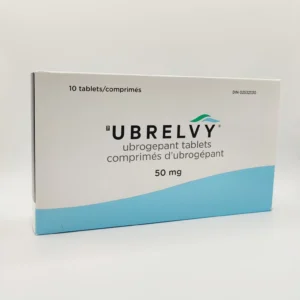
Compared with ubrogepant, another oral CGRP receptor antagonist, dosing schedules and interaction profiles differ. Selection between therapies depends on clinical factors, response history, tolerability, and cost considerations.
Preventive CGRP monoclonal antibodies are indicated for migraine prevention rather than acute treatment.
Storage, Handling and Practical Advice
- Store in original blister packaging at room temperature.
- Protect from moisture.
- Open blister only when ready to take a dose.
- Handle with dry hands.
Maintaining hydration, identifying personal migraine triggers, and keeping a headache diary may support better long-term migraine management.
Pricing and U.S. Shipping Information
- Price: $248.95 for 8 tablets (75 mg ODT)
- Shipping to U.S.: Typically 5–10 business days after processing
Supply is generally limited to personal-use quantities (commonly up to 90 days, subject to applicable regulations).
How to Buy Nurtec ODT Online (Step-by-Step)
- Select your required pack size and complete checkout.
- Provide valid prescription information if required.
- Shipping typically occurs within 5–10 business days after order processing.
When to Seek Medical Attention
- Difficulty breathing
- Swelling of face, lips, or tongue
- Severe or persistent rash
- Any unusual or severe symptoms following dosing
Frequently Asked Questions (FAQ)
Why is Nurtec expensive?
Pricing reflects research and development costs, manufacturing complexity, and the absence of a generic equivalent. Patient assistance programmes may be available depending on eligibility.
Is Nurtec addictive?
No. Rimegepant is not associated with dependency or addiction.
Does Nurtec cause weight gain?
Weight gain has not been commonly reported in clinical studies.
Is Nurtec available outside the United States?
Availability varies by region and regulatory approval status. Check with authorised suppliers and healthcare professionals.