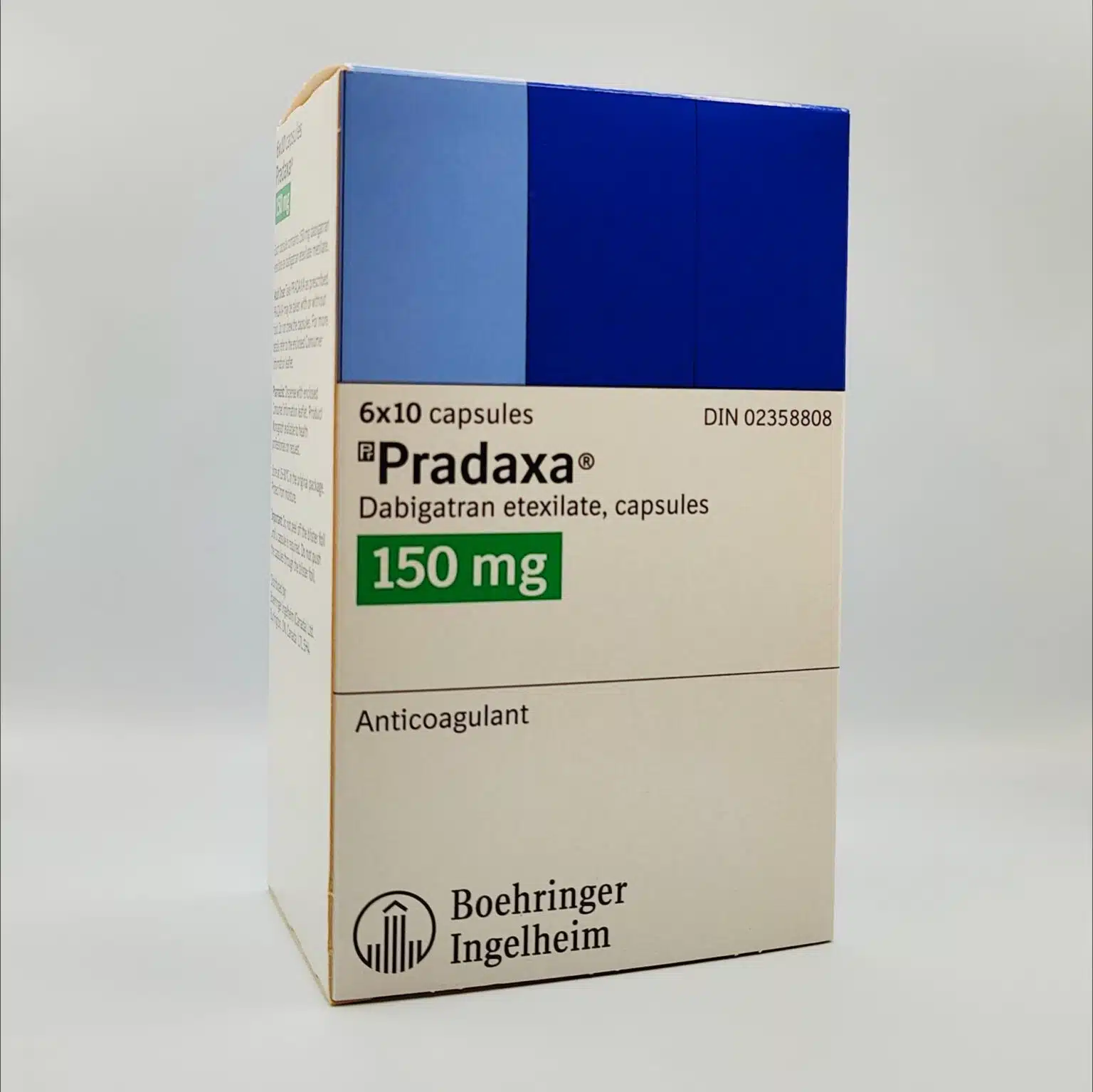
Pradaxa (Dabigatran Etexilate) Capsules
Pradaxa (dabigatran etexilate) is a prescription anticoagulant medication used to prevent harmful blood clots and reduce the risk of stroke in patients with non-valvular atrial fibrillation (AF). It is also prescribed for preventing venous thromboembolism (VTE) following hip or knee replacement surgery, as well as for the treatment of deep vein thrombosis (DVT) and pulmonary embolism (PE). Pradaxa works by selectively inhibiting thrombin, a central enzyme in the blood clotting process, to provide effective anticoagulation.
Mechanism of Action: How Pradaxa Works
Pradaxa functions as a direct thrombin inhibitor, blocking thrombin’s role in converting fibrinogen into fibrin, which is essential for blood clot formation. By reducing thrombin activity, Pradaxa limits clot development in arteries and veins, helping prevent strokes in atrial fibrillation patients and treating or preventing VTE conditions such as DVT and PE.
Unlike vitamin K antagonists like warfarin, Pradaxa has predictable pharmacokinetics and does not require routine INR monitoring, simplifying long-term therapy while maintaining consistent anticoagulation levels.
Indications and Clinical Uses
Pradaxa is indicated for the following conditions:
- Stroke prevention in adults with non-valvular atrial fibrillation.
- Prophylaxis of VTE following hip or knee replacement surgery.
- Treatment of DVT and PE.
- Prevention of recurrent DVT and PE after initial therapy.
Clinical studies, including the RE-LY trial, have demonstrated Pradaxa’s efficacy in reducing stroke risk while maintaining a manageable safety profile compared to warfarin.
Pradaxa Dosage and Administration
Pradaxa is available in hard capsule form in three strengths: 75 mg, 110 mg, and 150 mg. The dosing regimen depends on the condition being treated, renal function, age, and other individual factors.
- Atrial Fibrillation: 150 mg twice daily (standard), or 110 mg twice daily for patients at higher bleeding risk or with moderate renal impairment.
- Post Hip or Knee Replacement Surgery: 110 mg once daily on the first day, followed by 220 mg once daily.
- DVT and PE Treatment: 150 mg twice daily after initial parenteral anticoagulation if indicated.
Capsules should be swallowed whole with a full glass of water and can be taken with or without food. Consistent timing of doses is essential to maintain therapeutic anticoagulant levels.
Important: Do not discontinue Pradaxa without consulting your healthcare provider, as abrupt cessation may increase the risk of stroke or recurrent thromboembolic events.
Common Side Effects of Pradaxa
Pradaxa, like other anticoagulants, carries a risk of bleeding and other adverse effects. Frequently reported side effects include:
- Minor bleeding, such as bruising, nosebleeds, or prolonged menstrual bleeding.
- Indigestion or dyspepsia.
- Stomach discomfort or pain.
- Nausea or mild gastrointestinal upset.
Serious Adverse Effects
Seek urgent medical attention if you experience any of the following:
- Severe or uncontrolled bleeding, including blood in urine or stool.
- Signs of allergic reactions, such as swelling of the face, lips, tongue, or throat.
- Severe liver problems, indicated by yellowing of the skin or eyes (jaundice).
- Unexplained or persistent dizziness, fainting, or severe headache.
Prompt reporting of adverse events is crucial, particularly since Pradaxa increases bleeding risk.
Drug Interactions
Pradaxa may interact with various medications, potentially increasing bleeding risk or affecting drug efficacy:
- Other anticoagulants (warfarin, heparin, rivaroxaban).
- Nonsteroidal anti-inflammatory drugs (NSAIDs) such as ibuprofen or naproxen.
- Antiplatelet agents (aspirin, clopidogrel).
- P-glycoprotein (P-gp) inhibitors like amiodarone or dronedarone.
Always provide a complete list of prescription, over-the-counter, and herbal medications to your healthcare provider before starting Pradaxa.
Precautions and Special Considerations
Pradaxa should be used with caution in the following scenarios:
- History of bleeding disorders or gastrointestinal ulcers.
- Impaired kidney or liver function, which may require dose adjustments.
- Recent major surgery, trauma, or high bleeding risk situations.
- Pregnancy or breastfeeding, as safety is not fully established.
Periodic assessment of renal and hepatic function is recommended to ensure safe long-term use.
How to Safely Purchase Pradaxa Online
Purchasing Pradaxa from a reputable online pharmacy such as LifePath Meds can offer cost savings and convenience. Important steps include:
- Consult Your Healthcare Provider: Ensure online ordering is safe and appropriate for your therapy.
- Understand Regulations: FDA guidelines generally allow importing up to a 90-day supply of medication for personal use.
- Verify Pharmacy Credentials: Confirm the pharmacy is licensed and regulated to prevent counterfeit medications.
These measures help maintain safety while benefiting from potential cost reductions.
Storage Instructions
Keep Pradaxa capsules in their original container to protect against moisture. Store at room temperature (15–30°C / 59–86°F), away from heat, light, and children. Do not use capsules that are damaged or discoloured.
Frequently Asked Questions (FAQs)
Is Pradaxa a blood thinner?
Yes. Pradaxa is an anticoagulant that inhibits thrombin, preventing blood clot formation and reducing the risk of stroke and venous thromboembolism.
Is there a generic version of Pradaxa?
Generic dabigatran etexilate is available and may be purchased from LifePath Meds at reduced cost. Discuss with your healthcare provider whether the generic option is appropriate for you.
Can I stop taking Pradaxa if I feel well?
No. Discontinuing Pradaxa without medical guidance may increase your risk of stroke or clot formation. Always follow your prescribed schedule and consult your doctor before making any changes.
Using Pradaxa Effectively
Take Pradaxa exactly as prescribed by your healthcare provider. Capsules should be swallowed whole with a full glass of water and taken at the same times each day. Avoid crushing, chewing, or opening capsules, as this can affect absorption and efficacy.
Monitoring and Follow-Up
Routine laboratory monitoring is generally not required for Pradaxa. However, follow-up with your clinician is recommended to:
- Monitor for signs of bleeding or other adverse effects.
- Assess renal and hepatic function periodically.
- Review concomitant medications that may affect anticoagulation.
Alternative Anticoagulants
Depending on your medical history and preferences, alternatives to Pradaxa include:
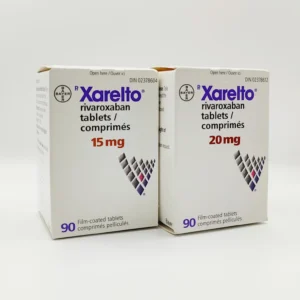
- Rivaroxaban (Xarelto) – a Factor Xa inhibitor
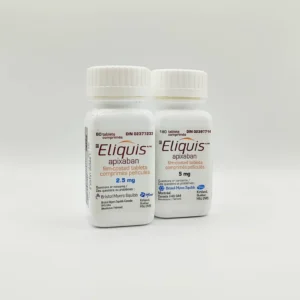
- Apixaban (Eliquis) – a Factor Xa inhibitor with a similar profile
- Warfarin – traditional vitamin K antagonist requiring INR monitoring
- Edoxaban (Savaysa) – an oral Factor Xa inhibitor alternative
Therapy choice should be guided by your physician, based on individual risk and tolerance.