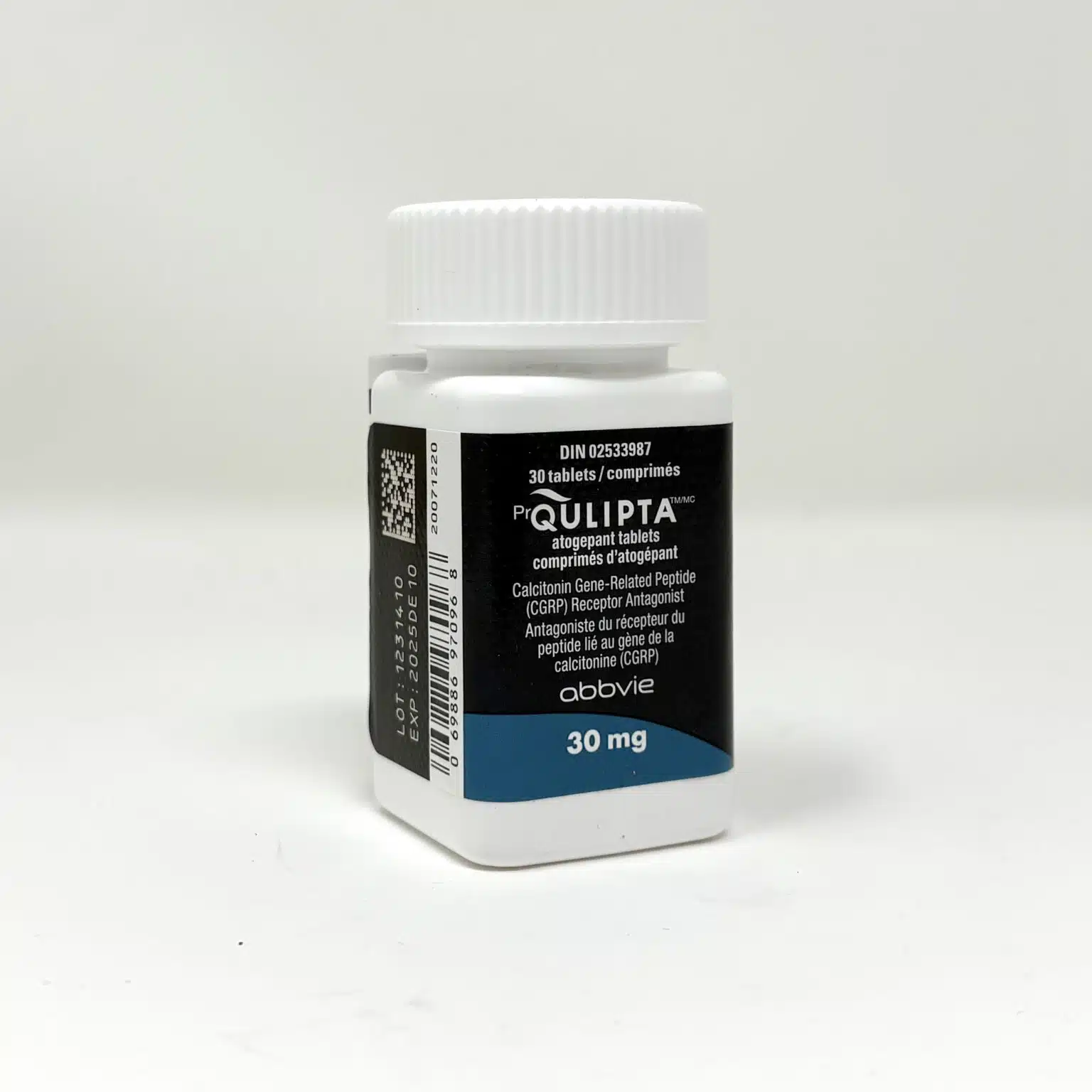
Qulipta (Atogepant) Tablets for Migraine Prevention
Prescription CGRP receptor antagonist for the preventive treatment of migraine in adults.
What Is Qulipta (Atogepant)?
Qulipta (atogepant) is an oral calcitonin gene-related peptide (CGRP) receptor antagonist indicated for the preventive treatment of migraine in adults who experience recurrent migraine attacks, including those with at least four migraine days per month. Unlike acute migraine medicines that are taken during an attack, Qulipta is designed for daily use to reduce the frequency of migraine episodes over time.
Migraine is a chronic neurological disorder characterised by recurrent headaches often accompanied by nausea, photophobia, phonophobia, and in some individuals, aura symptoms. According to the NHS overview of migraine, preventive treatment may be considered when attacks are frequent, severe, or significantly impact quality of life.
Qulipta offers a targeted approach by blocking the CGRP pathway, a key biological mechanism implicated in migraine pathophysiology. It is suitable for both episodic and chronic migraine prevention, as determined by a healthcare professional.
Understanding Migraine and the Role of CGRP
Migraine involves complex interactions between the trigeminal nerve system, central pain pathways, and inflammatory mediators. One of the most important mediators identified in migraine research is CGRP, a neuropeptide released during migraine attacks.
CGRP contributes to:
- Dilation of cranial blood vessels
- Transmission of pain signals
- Neurogenic inflammation within the trigeminovascular system
Elevated CGRP levels have been observed during migraine attacks, and therapies targeting this pathway have been shown to reduce migraine frequency. Clinical guidance such as NICE Clinical Knowledge Summary on migraine prevention recognises the role of preventive therapy in appropriately selected patients.
How Qulipta (Atogepant) Works
Atogepant works by selectively blocking the CGRP receptor. By preventing CGRP from binding to its receptor, Qulipta interrupts a central mechanism involved in migraine initiation and maintenance.
This targeted mechanism:
- Reduces the frequency of migraine attacks
- May decrease migraine severity over time
- Provides a non-vasoconstrictive option compared with certain older therapies
Because Qulipta does not rely on vasoconstriction, it may be considered in patients for whom vasoconstrictive therapies are unsuitable, subject to clinical evaluation.
Indications: Who Is Qulipta For?
Qulipta is indicated for the preventive treatment of migraine in adults. It may be prescribed for:
- Episodic migraine (typically defined as fewer than 15 headache days per month)
- Chronic migraine (15 or more headache days per month, with at least 8 migraine days)
The decision to start preventive therapy depends on attack frequency, functional impairment, response to acute treatments, and patient preference.
Qulipta Dosage and Administration
Available Strengths
- 10 mg tablets
- 30 mg tablets
- 60 mg tablets
Recommended Dosing
For episodic migraine prevention, recommended doses include 10 mg, 30 mg, or 60 mg taken once daily.
For chronic migraine prevention, the recommended dose is 60 mg once daily.
Administration Guidance
- Take orally once daily.
- May be taken with or without food.
- Swallow tablets whole; do not crush or chew.
- Take at approximately the same time each day to maintain consistent drug levels.
Missed Dose
If you forget a dose, take it as soon as you remember unless it is nearly time for your next scheduled dose. Do not take two doses at the same time to compensate for a missed dose.
Possible Side Effects of Qulipta
Like all prescription medicines, Qulipta may cause adverse effects. In clinical studies, the most commonly reported side effects included:
- Nausea
- Constipation
- Fatigue
- Decreased appetite
- Dizziness
Serious but Rare Adverse Effects
- Severe allergic reactions (rash, swelling, difficulty breathing)
- Severe constipation requiring medical intervention
- Severe liver problems
Seek immediate medical attention if you experience symptoms of a serious allergic reaction or signs of liver dysfunction such as jaundice, dark urine, or persistent abdominal pain.
Drug Interactions
Qulipta may interact with medicines that affect its metabolism or transport in the body. Inform your healthcare provider about all prescription medicines, over-the-counter products, vitamins, and herbal supplements you are taking.
Examples of Interacting Medicines
- Strong CYP3A4 inhibitors (e.g., itraconazole, clarithromycin)
- Moderate CYP3A4 inhibitors (e.g., ciprofloxacin, fluconazole)
- Strong CYP3A4 inducers (e.g., rifampicin, St John’s wort)
- OATP inhibitors (e.g., cyclosporine)
Dose adjustments or alternative treatments may be required depending on the interacting medicine.
Precautions and Special Populations
- Liver impairment: Use cautiously in patients with severe hepatic dysfunction.
- Kidney impairment: Caution is advised in severe renal impairment.
- Pregnancy: Inform your healthcare provider if you are pregnant or planning pregnancy. Limited human data are available.
- Breastfeeding: It is unknown whether atogepant passes into human milk. Discuss risks and benefits with your clinician.
Patients should undergo regular clinical review to assess treatment response and tolerability.
Buying Qulipta Online
Some patients explore purchasing Qulipta online through reputable international referral services such as LifePath Meds to manage prescription costs.
- Consult your doctor: Always confirm that Qulipta is appropriate before purchasing.
- Understand import regulations: Regulatory authorities such as the FDA personal importation guidance generally permit up to a 90-day supply for personal use under specific conditions.
For product availability and pricing information, visit: Qulipta (Atogepant) Product Page.
Storage Instructions
Store Qulipta tablets at controlled room temperature between 15°C and 30°C (59°F and 86°F). Keep in the original container, protected from light and moisture. Ensure the medicine is kept out of sight and reach of children.
When to Seek Medical Advice
- Signs of severe allergic reaction
- Persistent or severe constipation
- Symptoms suggestive of liver injury
- Worsening or changing headache patterns
How To Use
Take Qulipta exactly as prescribed. Swallow the tablet whole once daily with or without food. Consistent daily administration helps maintain steady medication levels and supports effective migraine prevention.