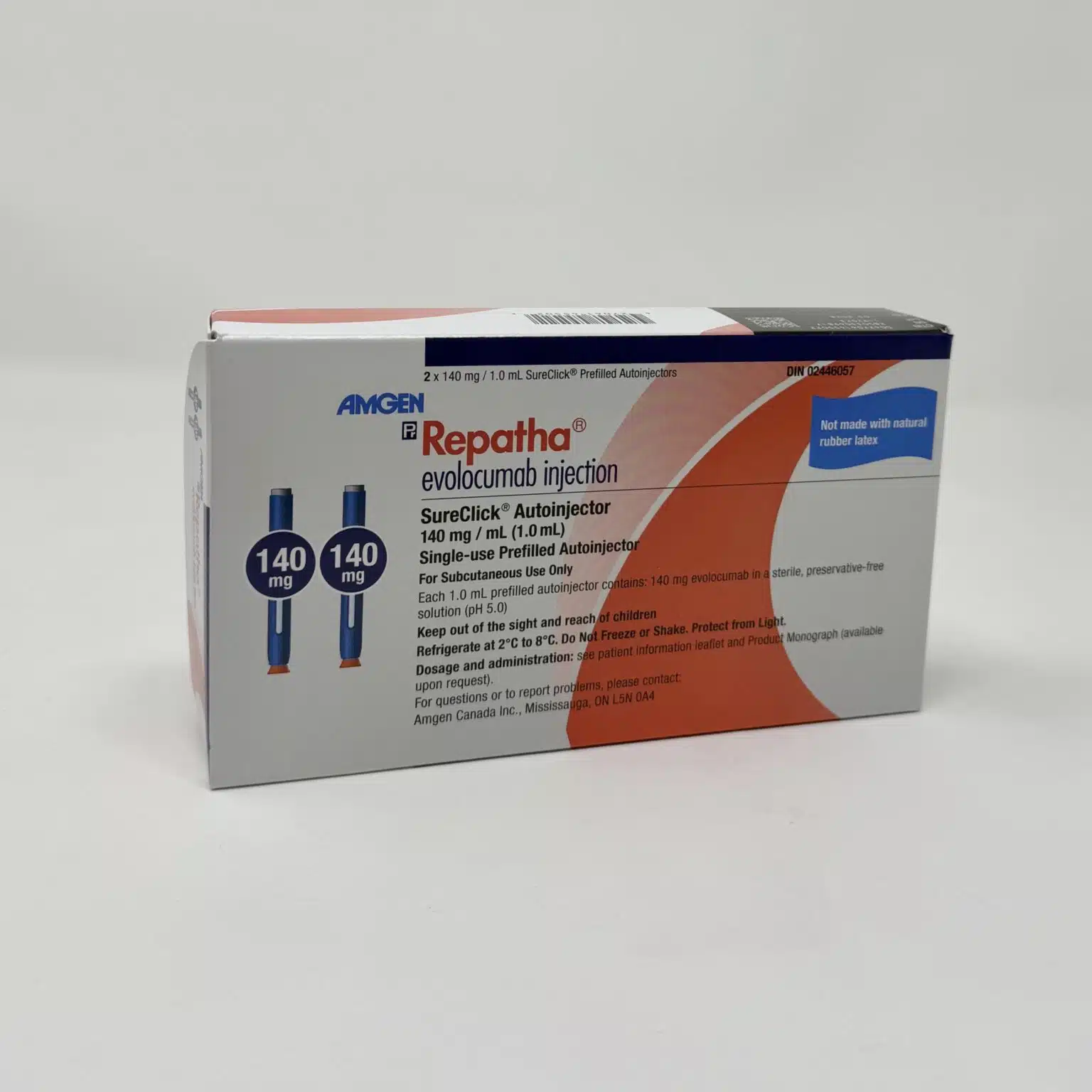
Repatha Auto Injector (Evolocumab)
Repatha (evolocumab) is a PCSK9 inhibitor used to significantly lower LDL (“bad”) cholesterol and reduce the risk of heart attack, stroke, and other cardiovascular events in eligible patients. It is prescribed for adults with atherosclerotic cardiovascular disease (ASCVD), primary hyperlipidemia (including heterozygous familial hypercholesterolemia), and certain patients with homozygous familial hypercholesterolemia (HoFH). Repatha is administered by subcutaneous injection and is commonly used alongside diet and statin therapy.
Comprehensive Guide to Repatha (Evolocumab)
Repatha is the brand name for evolocumab, a fully human monoclonal antibody that targets and inhibits proprotein convertase subtilisin/kexin type 9 (PCSK9). It is developed by major regulatory agencies worldwide for cholesterol management and cardiovascular risk reduction.
Elevated low-density lipoprotein cholesterol (LDL-C) is a major contributor to atherosclerosis, which can lead to heart attack, stroke, and peripheral arterial disease. While statins remain first-line therapy, many patients either do not achieve adequate LDL-C reduction or cannot tolerate high-intensity statins. Repatha offers an advanced treatment option that can dramatically lower LDL-C levels—often by 50–60% beyond background therapy.
For individuals facing high local drug costs, ordering Repatha through licensed international referral services such as LifePath Meds may provide meaningful savings while maintaining pharmaceutical quality standards.
What Repatha Is Used For
Atherosclerotic Cardiovascular Disease (ASCVD)
Repatha is indicated to reduce the risk of myocardial infarction (heart attack), stroke, and coronary revascularization in adults with established ASCVD. These patients may already have experienced a prior heart attack, ischemic stroke, or symptomatic peripheral artery disease.
Primary Hyperlipidemia (Including HeFH)
Repatha is used to lower LDL-C in adults with primary hyperlipidemia, including:
- Heterozygous familial hypercholesterolemia (HeFH)
- Non-familial hypercholesterolemia
Homozygous Familial Hypercholesterolemia (HoFH)
Repatha provides additional LDL-C lowering in adults and certain pediatric patients with HoFH. In some cases, treatment may be coordinated with LDL apheresis schedules.
Repatha is typically used in combination with maximally tolerated statins and lifestyle modifications, including diet and exercise.
How Repatha (Evolocumab) Works
PCSK9 is a protein that binds to LDL receptors on liver cells and marks them for degradation. LDL receptors are responsible for clearing LDL cholesterol from the bloodstream. When PCSK9 activity is high, fewer LDL receptors are available, resulting in elevated LDL-C levels.
Evolocumab binds to PCSK9 and prevents it from attaching to LDL receptors. This allows more LDL receptors to remain active on the liver surface, significantly increasing LDL clearance from the blood.
The result is:
- Substantial LDL-C reduction
- Improved lipid profile
- Reduced cardiovascular event risk
Clinical outcome trials have demonstrated that LDL reduction with evolocumab translates into measurable reductions in heart attack and stroke risk in appropriate high-risk patients.
Dosing and Administration
ASCVD / Primary Hyperlipidemia (Including HeFH)
- 140 mg subcutaneously every 2 weeks
- OR 420 mg once monthly
Homozygous Familial Hypercholesterolemia (HoFH)
- 420 mg once monthly
- May increase to 420 mg every 2 weeks based on response
- Patients undergoing apheresis may begin with every-2-week dosing
Missed Dose Instructions
If more than 7 days remain before your next scheduled dose, take the missed dose as soon as possible. If 7 days or fewer remain, skip the missed dose and resume your original schedule. Do not double doses.
Dosage Forms & Strengths
- 140 mg/mL single-use prefilled autoinjector
- 140 mg/mL single-use prefilled syringe
- 420 mg/3.5 mL automated mini-doser with prefilled cartridge
How to Use the Repatha Auto Injector
Repatha is administered as a subcutaneous injection into the:
- Abdomen
- Thigh
- Upper arm (if administered by another person)
Important administration steps:
- Remove from refrigerator and allow to reach room temperature (about 30–45 minutes).
- Do not shake the device.
- Rotate injection sites with each dose.
- Follow detailed device instructions provided with your prescription.
Common Side Effects
Most side effects are mild to moderate:
- Injection-site reactions (redness, swelling, bruising, pain)
- Nasopharyngitis
- Upper respiratory tract infections
- Influenza
- Headache
- Back pain
- Muscle pain
Serious Side Effects
Though uncommon, serious reactions may include:
- Severe allergic reactions (rash, hives, swelling of face or throat)
- Difficulty breathing
Seek emergency medical attention if symptoms of anaphylaxis occur.
Who Should Not Use Repatha
- Patients with known hypersensitivity to evolocumab or product components
Use With Caution
- Severe hepatic impairment
- Limited data in severe renal impairment
- Pregnancy and breastfeeding (consult your provider)
Monitoring During Treatment
Healthcare providers typically monitor:
- Lipid panel (LDL-C levels)
- Overall cardiovascular risk profile
- Tolerance to therapy
Lipid levels are often rechecked 4–8 weeks after initiation or dose changes.
Storage & Handling
- Store refrigerated at 2°C–8°C.
- Do not freeze.
- Keep in original carton to protect from light.
- If necessary, may be kept at room temperature (per labeling) for a limited time.
- Do not use if solution appears cloudy or discolored.
Lower Your Cost for Repatha
Repatha can be expensive in certain countries. Ordering from licensed referral services such as LifePath Meds may provide cost savings for eligible patients. Always ensure:
- You have a valid prescription.
- The pharmacy is properly licensed.
- You understand import regulations for personal use.
How to Buy Repatha Online (Step-by-Step)
- Select your prescribed device (140 mg autoinjector/syringe or 420 mg mini-doser).
- Complete secure checkout with valid details.
- Arrange shipment to your address.
- Follow storage instructions immediately upon receipt.
When to Seek Medical Help
- Signs of severe allergic reaction
- Persistent or worsening injection-site reactions
- Symptoms of cardiovascular events (chest pain, sudden weakness, slurred speech)
Frequently Asked Questions (FAQs)
How much can Repatha lower LDL cholesterol?
Clinical studies show reductions of approximately 50–60% when added to statins.
Can Repatha replace statins?
Repatha is often used in addition to statins, though it may be used alone in patients intolerant to statins.
Is Repatha a lifelong treatment?
For many high-risk patients, LDL management requires long-term therapy. Your prescriber will determine duration.