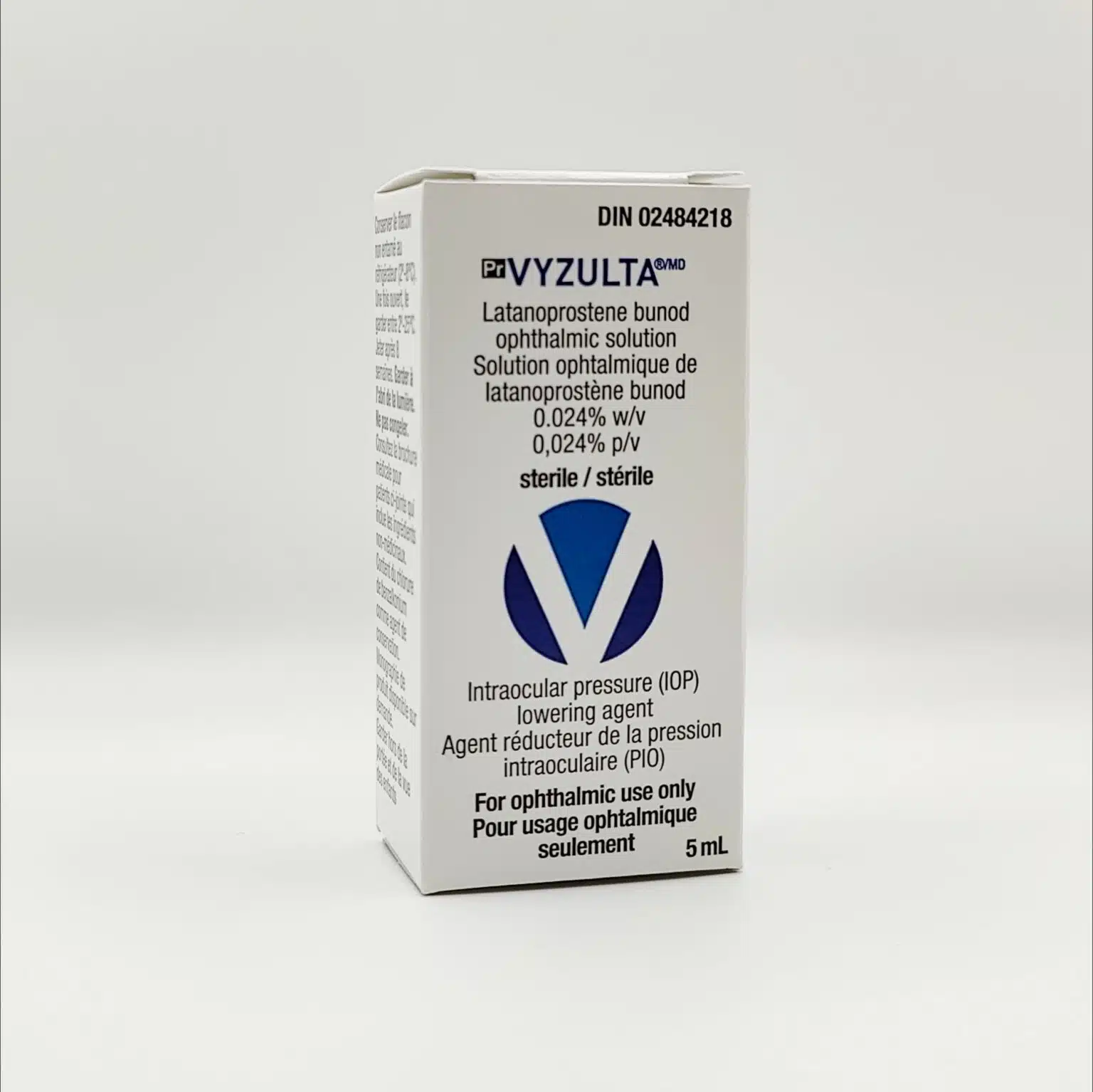
Vyzulta 0.024% Eye Drops (Latanoprostene Bunod)
Vyzulta 0.024% is a prescription-only ophthalmic solution containing latanoprostene bunod, indicated for the reduction of elevated intraocular pressure (IOP) in adults diagnosed with open-angle glaucoma or ocular hypertension. Effective control of IOP is essential in lowering the risk of progressive optic nerve damage and potential vision loss.
Overview of Vyzulta 0.024%
Vyzulta is a once-daily glaucoma eye drop formulated with latanoprostene bunod 0.024%. It belongs to the class of medicines known as prostaglandin F2α analogues, a group widely recommended in clinical practice as first-line therapy for lowering intraocular pressure in patients with primary open-angle glaucoma and ocular hypertension.
Persistently raised intraocular pressure is a major modifiable risk factor for glaucoma progression. According to guidance from the National Institute for Health and Care Excellence (NICE), reducing IOP remains the primary strategy in slowing optic nerve damage in glaucoma. By helping to improve aqueous humour outflow, Vyzulta plays an important role in long-term disease management.
Therapeutic Indications
Vyzulta is indicated for:
- Reduction of elevated intraocular pressure in open-angle glaucoma
- Management of ocular hypertension
Lowering intraocular pressure can significantly reduce the risk of irreversible visual field loss and blindness associated with untreated glaucoma.
How Vyzulta Works
Latanoprostene bunod is a nitric oxide-donating prostaglandin analogue. After instillation into the eye, it is metabolised into two active components: latanoprost acid and nitric oxide. These components act via complementary mechanisms to enhance aqueous humour drainage.
Dual Mechanism of Action
- Uveoscleral Outflow Enhancement: Similar to other prostaglandin analogues, latanoprost acid increases outflow through the uveoscleral pathway.
- Trabecular Meshwork Relaxation: Nitric oxide promotes relaxation of the trabecular meshwork and Schlemm’s canal, improving conventional outflow.
By targeting both major aqueous drainage routes, Vyzulta provides effective intraocular pressure reduction through a dual-pathway approach. This mechanism differentiates it from traditional single-pathway prostaglandin therapies.
Dosage Form and Strength
Vyzulta is supplied as a sterile ophthalmic solution containing 0.024% latanoprostene bunod.
- Presentation: 7.5 mL bottle
- Fill volume: 5 mL
- Route of administration: Topical ophthalmic use only
Recommended Dosage and Administration
The usual recommended dose is one drop into the affected eye(s) once daily in the evening.
More frequent administration is not recommended, as it may reduce the intraocular pressure-lowering effect.
Step-by-Step Application Guide
- Wash your hands thoroughly with soap and water.
- Shake the bottle gently before use.
- Tilt your head backwards and look upwards.
- Gently pull down the lower eyelid to create a conjunctival pocket.
- Instil one drop into the pocket without touching the dropper tip to the eye or surrounding surfaces.
- Close your eye and apply light pressure to the inner corner (punctal occlusion) for 1 minute to reduce systemic absorption.
- If using additional eye medications, wait at least 5 minutes before applying the next product.
Contact Lens Advice
Remove contact lenses prior to application. Lenses may be reinserted after 15 minutes.
Clinical Benefits of Vyzulta
- Effective reduction of intraocular pressure
- Dual-pathway mechanism of action
- Once-daily evening dosing
- Suitable for long-term glaucoma management
As prostaglandin analogues are frequently recommended as first-line therapy in UK glaucoma management pathways, Vyzulta represents an evidence-based treatment option.
Possible Side Effects
As with all medicines, Vyzulta may cause adverse effects. Most reactions are mild to moderate and ocular in nature.
Common Side Effects
- Conjunctival hyperaemia (eye redness)
- Ocular irritation or discomfort
- Eye pain
- Headache
- Blurred vision
Less Common but Serious Reactions
- Macular oedema
- Bacterial keratitis
- Increased eyelash length, thickness, or number
- Permanent darkening of iris colour
Seek urgent medical advice if you experience severe eye pain, significant vision changes, swelling, or signs of infection.
Precautions and Warnings
Inform your healthcare professional before starting treatment if you have:
- History of uveitis or iritis
- Previous macular oedema or torn posterior lens capsule
- Herpes simplex keratitis
- Severe or uncontrolled asthma
Iris pigmentation changes may be permanent and occur gradually over months or years. Eyelash alterations are also possible and may persist with continued use.
Storage Instructions
- Store unopened bottles in a refrigerator at 2°C to 8°C.
- After opening, keep at room temperature up to 25°C.
- Do not freeze.
- Protect from excessive heat and light.
- Discard 8 weeks after first opening.
Buying Vyzulta Online Safely
Purchasing prescription medicines online may offer convenience and cost benefits. However, patients must ensure the pharmacy is properly licensed and regulated.
- Verify registration with appropriate regulatory authorities.
- Ensure a valid prescription is required.
- Consult your doctor before importing medicines.
In the UK, guidance from the Medicines and Healthcare products Regulatory Agency (MHRA) advises patients to purchase medicines only from authorised sellers.
Frequently Asked Questions
How quickly does Vyzulta lower eye pressure?
Intraocular pressure reduction typically begins within hours of administration, with full effect observed after consistent daily use as prescribed.
Can Vyzulta change eye colour permanently?
Yes. Gradual darkening of the iris may occur and is often permanent.
Is Vyzulta suitable for long-term treatment?
Yes. Glaucoma is a chronic condition requiring ongoing therapy. Regular monitoring by an ophthalmologist is essential.