
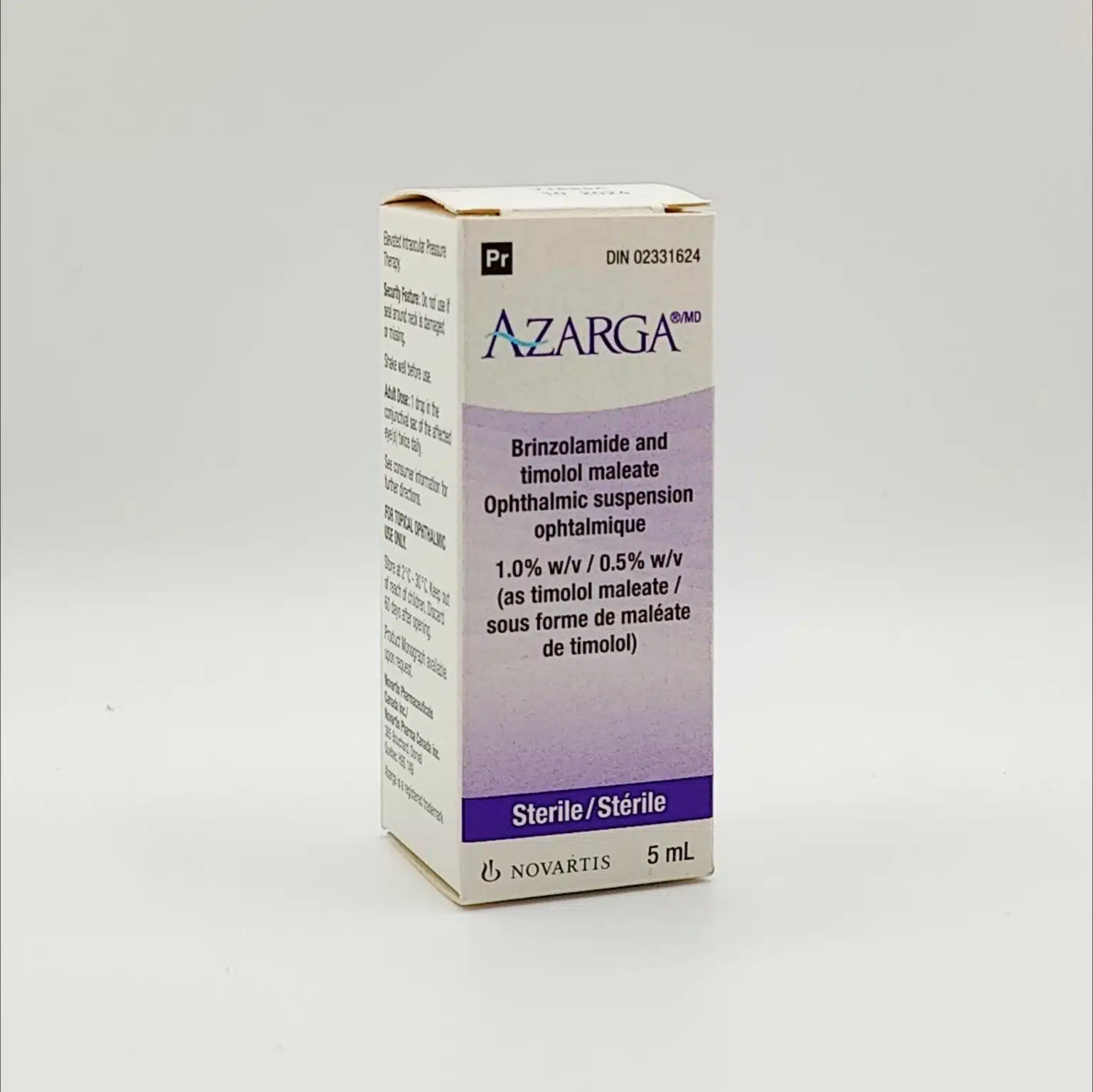
Azarga (Brinzolamide/Timolol) Eye Drops
Azarga eye drops combine brinzolamide and timolol to reduce elevated intraocular pressure (IOP) in adults with open-angle glaucoma or ocular hypertension. This dual-action formulation lowers aqueous humour production to help protect the optic nerve and preserve vision.
Comprehensive Overview of Azarga Eye Drops
Azarga is a prescription-only ophthalmic solution indicated for the reduction of elevated intraocular pressure (IOP) in adult patients diagnosed with open-angle glaucoma or ocular hypertension who require additional pressure lowering beyond monotherapy. Raised IOP is a significant risk factor for progressive optic nerve damage and irreversible visual field loss.
This fixed-dose combination contains two active ingredients: brinzolamide, a carbonic anhydrase inhibitor, and timolol, a non-selective beta-adrenergic receptor blocker. By targeting aqueous humour production through complementary mechanisms, Azarga provides enhanced IOP reduction compared with either component alone.
According to guidance from the National Institute for Health and Care Excellence (NICE) glaucoma guideline, reducing IOP remains the only proven method to slow progression of open-angle glaucoma. Combination therapies such as Azarga may be considered when monotherapy does not achieve adequate pressure control.
Therapeutic Indications
- Reduction of elevated intraocular pressure in open-angle glaucoma
- Management of ocular hypertension
- Patients requiring additional IOP lowering beyond single-agent therapy
Azarga is not indicated for acute angle-closure glaucoma emergencies. Patients with suspected acute glaucoma symptoms should seek urgent ophthalmic assessment.
How Azarga Works: Dual Mechanism of Action
Brinzolamide – Carbonic Anhydrase Inhibition
Brinzolamide selectively inhibits carbonic anhydrase II in the ciliary processes of the eye. This enzyme plays a central role in aqueous humour production. By reducing bicarbonate ion formation, fluid secretion into the posterior chamber decreases, resulting in lower intraocular pressure.
Timolol – Beta-Adrenergic Blockade
Timolol is a non-selective beta-blocker that reduces aqueous humour formation by blocking beta-adrenergic receptors within the ciliary epithelium. This further decreases fluid production and complements the action of brinzolamide.
Enhanced Pressure Reduction
The combination of these two agents produces a greater IOP-lowering effect than either medication alone. Fixed-dose combinations also simplify treatment regimens, potentially improving adherence — an important factor in chronic glaucoma management.
The NHS overview of glaucoma highlights the importance of consistent daily treatment to prevent optic nerve damage and preserve long-term vision.
Azarga Dosage and Administration
The usual recommended dose is one drop in the affected eye(s) twice daily, typically morning and evening. Always follow the prescribing clinician’s instructions.
Step-by-Step Application Guide
- Wash hands thoroughly before use.
- Shake the bottle well to ensure proper suspension of the medication.
- Tilt your head backwards and gently pull down the lower eyelid to create a small pocket.
- Instil one drop without allowing the dropper tip to touch the eye or surrounding surfaces.
- Close your eyes gently and apply pressure to the inner corner (nasolacrimal occlusion) for 1–2 minutes.
- If using additional eye drops, wait at least five minutes before administering the next medication.
Nasolacrimal occlusion reduces systemic absorption of timolol and may minimise the risk of systemic side effects.
How To Use Azarga Safely
Avoid contaminating the dropper tip. Keep the bottle tightly closed when not in use. Do not discontinue treatment abruptly without consulting your healthcare provider, as uncontrolled IOP may lead to progressive optic nerve damage.
If a dose is missed, continue with the next scheduled dose. Do not apply a double dose to compensate.
Possible Side Effects of Azarga
Common Side Effects
- Temporary blurred vision following instillation
- Bitter or unusual taste (dysgeusia)
- Mild eye irritation or discomfort
- Eye pain
Serious but Rare Side Effects
- Bradycardia (slow heart rate)
- Shortness of breath or bronchospasm
- Allergic reactions including rash or facial swelling
- Eye infection or severe inflammation
Because timolol is a beta-blocker, systemic absorption may affect cardiovascular or respiratory function. Seek urgent medical attention if experiencing breathing difficulties, chest pain, or fainting.
Drug Interactions
Azarga may interact with certain systemic medications. Inform your healthcare provider if you are taking:
- Other beta-blockers (oral or ophthalmic)
- Calcium channel blockers
- Antiarrhythmic agents
- Medicines for diabetes (beta-blockers may mask hypoglycaemia symptoms)
- Systemic carbonic anhydrase inhibitors
Combining Azarga with other carbonic anhydrase inhibitors is generally not recommended due to additive effects and increased risk of adverse reactions.
Precautions and Contraindications
Before initiating treatment, inform your clinician if you have:
- Bradycardia, heart block, or heart failure
- Asthma or chronic obstructive pulmonary disease (COPD)
- Renal or hepatic impairment
- A known sulfonamide allergy
- Pregnancy or breastfeeding
Azarga may cause dizziness or temporary blurred vision. Patients should avoid driving or operating machinery until visual clarity is restored.
Buying Azarga Online
Purchasing Azarga from a licensed pharmacy such as LifePath Meds may offer cost savings while ensuring access to authentic medication. Patients should always prioritise safety and regulatory compliance.
Safe Online Purchasing Guidelines
- Verify licensing: Ensure the pharmacy is fully regulated.
- Consult your doctor: Confirm suitability before international purchase.
- Understand U.S. import rules: The FDA generally permits a 90-day personal supply.
Avoid websites offering prescription medications without requiring a valid prescription, as counterfeit products pose significant health risks.
Storage Instructions
Store Azarga between 2°C and 30°C (36°F–86°F). Do not freeze. Keep the container tightly closed and protected from contamination. Once opened, the bottle should be discarded after 60 days, even if solution remains.
Always store out of sight and reach of children.
Frequently Asked Questions (FAQs)
How quickly does Azarga lower eye pressure?
IOP reduction typically begins within hours of administration, with consistent twice-daily use required for sustained control.
Can Azarga be used long-term?
Yes. Glaucoma and ocular hypertension are chronic conditions, and long-term therapy is usually required under ophthalmic supervision.
Is Azarga suitable for patients with asthma?
Caution is required. Timolol may exacerbate bronchospasm. Alternative treatments may be recommended for patients with significant respiratory disease.
Where can I access official prescribing information?
The official product monograph is available here: Azarga Product Monograph.
Reviews
There are no reviews yet.